
Music production
How to prepare a music production brief
Organize your starting material, references, versions and timeline before commissioning music.
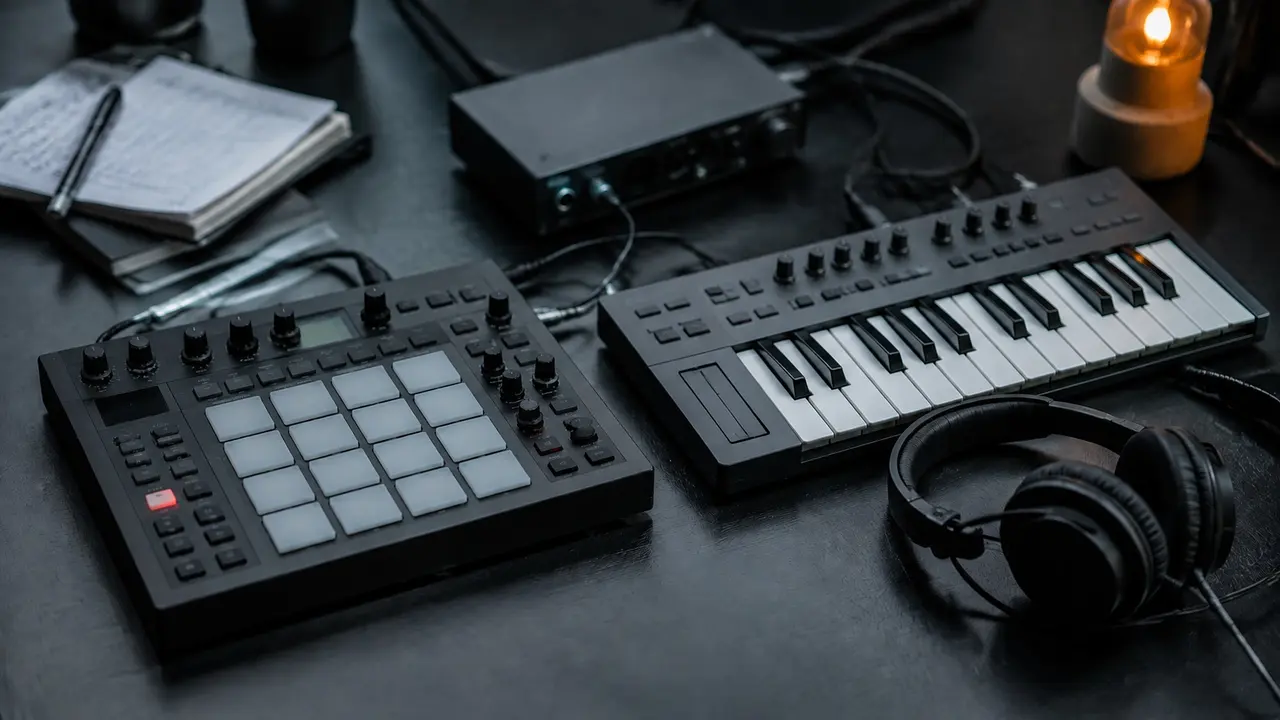
A useful music production brief explains the idea, the material you already have and the decisions you need help making. You can begin with a voice memo or an unfinished demo. Before discussing the work, put the intended use, a few annotated references, the deadline and the required versions in one place.
Start with the project’s purpose
Describe what you are making in two or three sentences. Is this an artist single, an EP, an instrumental or music for a moving image? Who will hear it, and what should they feel? A release built around a singer’s performance needs a different conversation from a short piece that supports dialogue.
Name the stage you are at. “The melody and lyrics are ready; the arrangement is open” is actionable. “Make it professional” leaves the central decisions unresolved. If you are still finding the direction, say so and ask to discuss development as part of the scope.
Make references specific
Choose two or three references and add a timestamp and a reason for each. Separate the elements you like: the drum space, the closeness of the vocal, the energy change into the chorus. Also identify anything you want to avoid.
A hypothetical note might read: “At 0:42, the rhythm opens up without becoming busy. We want that lift, with a more intimate vocal and fewer layers.” This is an example of useful communication, not a description of an AER project. References help explain direction; they are not a request to reproduce another recording.
Inventory what exists and what needs work
Make a short list of available lyrics, demos, recordings, MIDI and session files. Mark what is approved and what is provisional. Mention any collaborators who need to approve changes, and identify supplied samples or third-party material that need a separate usage discussion.
| Starting point | Decision to discuss |
|---|---|
| A melody or voice memo | Song structure, harmony and arrangement |
| A demo with the direction established | Production changes, recording and what to retain |
| Recorded parts with an unfinished balance | Editing and mixing scope |
| An approved stereo mix | Mastering and release formats |
You do not need to export every file before the first conversation. Describe what you have and agree a sharing method before sending confidential or unreleased material.
List the versions before agreeing the scope
A main song, instrumental, clean version, alternate ending and short edit are distinct deliverables to discuss. Write down which you need, their durations and their intended use. Session files, MIDI and stems should also be named explicitly if needed; their inclusion is agreed for each project.
Agree a file handoff with the person receiving it. For example, Ableton Live offers separate controls for the rendered tracks, start and length, sample rate, bit depth and normalization. Those choices affect the output; the export menu alone cannot establish the recipient’s requirements. See the Ableton export documentation when preparing files from Live. Avoid changing settings just to make a file look more impressive.
Give the schedule room for decisions
Separate the release date from the date you need approved audio. List any recording date, picture delivery, feedback window or distributor deadline already fixed. Identify one person to consolidate feedback, even when several people will review the work.
Share an estimated budget range and the stages it should cover. Ask how revision rounds, additional versions and changes of direction will be handled. AER’s production scope, pricing, usage and credits are agreed for each commission; this guide does not define a package or a turnaround promise.
Copy this brief checklist
- Project and intended audience or use.
- Current stage and links or a description of available material.
- Two or three references with timestamps and reasons.
- What should be kept, changed or developed.
- Required versions, lengths and any file-delivery requirements.
- Audio approval date, release date and feedback contact.
- Estimated budget range, collaborators and usage questions.
If some answers are unknown, mark them as open. A clear question is more useful than an invented technical requirement. Explore AER’s music production services, then use the project enquiry below to describe your starting point.
Source and further reading
Ableton Live 12 manual: managing files and exporting audio explains Live’s export controls. The planning checklist and hypothetical reference note above are AER editorial guidance, rather than a specification from Ableton. Source checked 16 October 2026.