
Mixing & mastering
How to give useful feedback on a first mix
Turn a first listen into clear, timed notes that explain what to keep, what to change and which questions need a conversation.
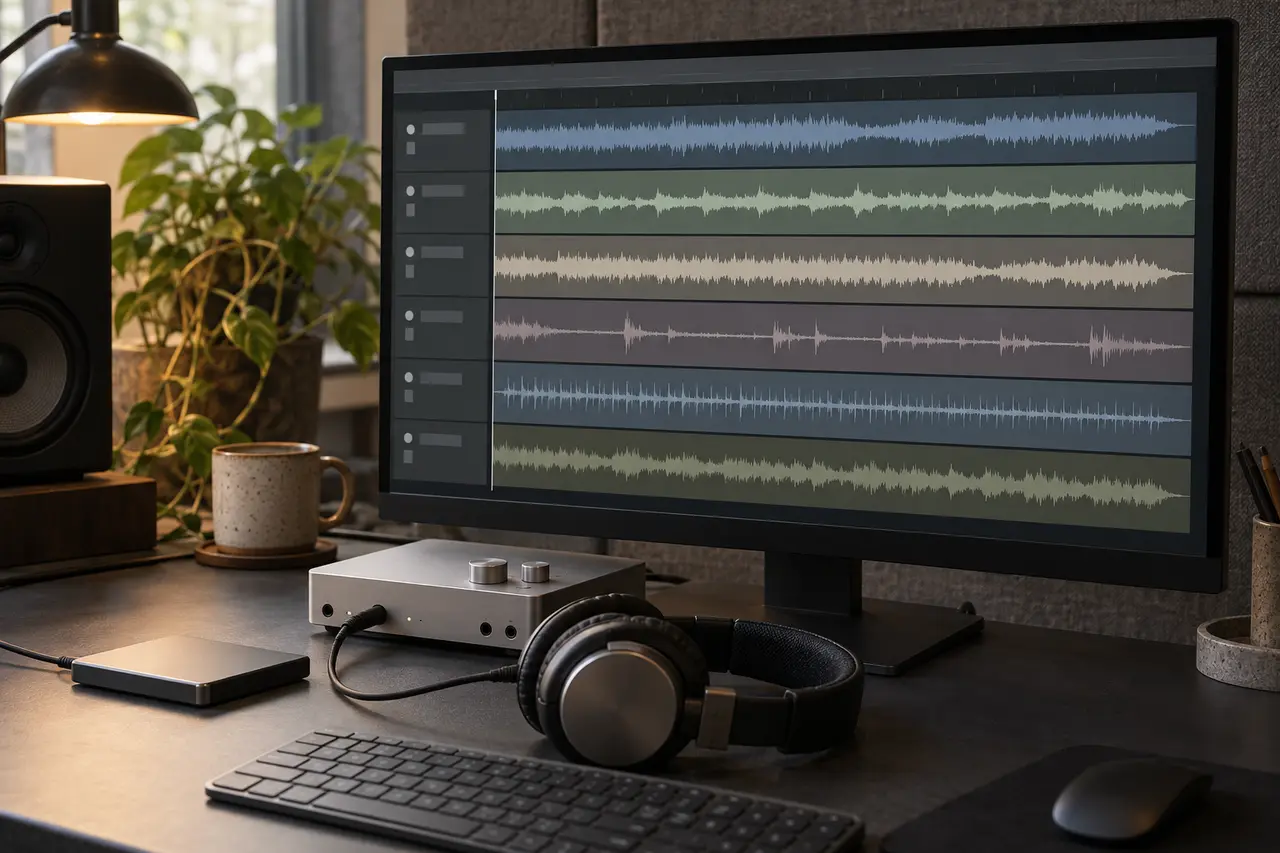
For useful mix feedback, name the version you heard and give each requested change a location, an observation and a desired result. Separate corrections from creative preferences and requests for new work. Agree who will collect the comments and send one current list to the engineer.
You do not need to prescribe an EQ setting or know the name of a compressor. Explain what you hear, how it affects the song and what you want the listener to notice.
Confirm the file and the purpose of this round
Start with the exact filename or review-link version. Confirm whether you are reviewing an initial balance, a detailed revision or a mix for approval. Ask which parts are ready for comment and which decisions are still open.
Use elapsed playback time from that file for your notes, and say whether it includes any silence at the beginning. A bar number can be helpful when everyone shares the same session, but it should not replace an identifiable moment in the review file. Name the section or lyric as well: “00:46–00:58, first chorus, last line.”
Keep the earlier version available. If you accidentally review an old file, tell the engineer before combining those comments with notes on a newer mix.
Listen for the song before writing a change list
On the first pass, listen from beginning to end on a familiar system at a comfortable, consistent level. Write down the overall impression before stopping at individual sounds. Does the vocal tell the story you intended? Does the chorus have the movement you wanted? Which details already feel right?
On a second pass, locate the moments behind those impressions. Note what should stay as well as what should change. “Keep the intimate verse vocal” gives context for a later request to make the chorus feel larger.
If you also check headphones, a car or another speaker, identify where a concern appeared. Report “the bass line is hard to follow on these headphones” before turning one listening impression into a demand to change the whole mix. Tell the engineer about uncertainty instead of hiding it behind technical language.
Dolan, Perugia and Kluk (2022) studied 34 adults using headphones. Their reported preferred listening levels were:
| Group | Participants | Median preferred level, dB(A) |
|---|---|---|
| Musicians | 17 | 80.61 |
| Non-musicians | 17 | 73.61 |
The group medians differ by 7.00 dB. These observed preferences are not recommended monitoring levels or file-loudness targets. This small study did not test mix feedback. Keep a comfortable playback setting consistent when comparing revisions.
Use references for a specific comparison
Use the rough mix to explain a feeling you want to preserve, or name a passage in another recording and the detail you mean: vocal distance, for example. Reduce the louder playback before comparing. iZotope’s guide discusses rough and client references and level matching. You are explaining a direction, so send a question if the comparison remains unclear.
A 2012 experiment by Croghan, Arehart and Kates tested 24 adults with limiter-processed rock and classical excerpts. The heaviest settings generally hurt quality ratings with and without loudness equalization. It used two recordings, so it cannot prescribe a compression setting for your song.
For your comparison, replay the same passage through the same player and listening system, with playback processing kept consistent. Lower the louder version for the comparison, then describe the vocal clarity, impact or space you hear. Include that level adjustment in your notes. An observation about overall volume and a preference about the sound are useful to discuss separately.
Write each note as a moment, an observation and a goal
The examples below use a fictional file, Song_Mix_v01.wav. They are teaching notes, not feedback from an AER client or required mix settings.
| Broad comment | A note the engineer can locate and discuss |
|---|---|
| “Make the vocal better.” | “Song_Mix_v01.wav, 00:46–00:58, first chorus: I lose the last words under the backing vocals. I want the lyric to remain understandable while keeping the soft lead delivery.” |
| “The bass is muddy.” | “01:12, when the bass enters: the kick pattern becomes hard for me to follow. Can we make that rhythm clearer while keeping the bass line’s weight?” |
| “Fix the ending.” | “03:18, final vocal delay: the repeat seems to stop early. Please check the ending against the agreed rough mix before changing the tail.” |
Add a priority. An unintended missing word, a preference for more space and a question about the ending need different conversations. If a change applies throughout the song, say “throughout” and give one representative moment instead of listing every occurrence.
Separate mix revisions from new production work
A note about the balance of supplied parts is different from a request for a new vocal take, a different arrangement or an additional instrument. Some requests may combine both. Describe the desired result, then ask what work it involves.
Before sending a new recording or replacing source files, agree how that change affects the current mix, the schedule and any additional scope. Also confirm extra output versions, such as an instrumental or a vocal-up mix. Do not assume they are included in a feedback round.
For AER projects, editing, vocal work, revision rounds and export versions are agreed before the session. Keep the agreed revision allowance, outputs and delivery dates alongside the current notes.
Send one consolidated list with clear priorities
If an artist, producer and label are reviewing the song, choose who will collect and resolve their comments. “More prominent vocal” and “quieter vocal” should arrive as an open decision to discuss, rather than two unexplained instructions.
Here is a copyable structure. The priorities are illustrative; adapt the fields to the review process you agreed.
- Project and file: song name, exact mix version and review date.
- This round: what you are reviewing and who will approve it.
- Keep: the sounds or musical relationships that already work.
- Highest priority: timestamp, section or lyric, what you hear and the result you want.
- Creative preferences: optional changes, with a reference passage when useful.
- Open questions: uncertain observations and requests that may need new work.
- Listening context: systems used and where a concern appeared.
- Comparison setup: versions and passage compared, plus any level matching or playback processing.
- Coordinator and next step: one contact, the agreed review deadline and any decisions still needed.
Send corrections to that list as a clearly identified update. Keep the current version easy to find instead of spreading new instructions across several conversations.
Check the revision against the notes and the whole song
When the next mix arrives, confirm its version and review the requested changes. Mark each item as resolved, still open or needing clarification. Include the new timestamp if an edit has moved the moment.
Then listen through the complete song again. Confirm the choices you wanted to preserve as well as the changes. If you reverse an earlier decision, explain that change in direction. Ask how it fits the remaining scope before treating it as a correction the engineer missed.
If you are choosing an engineer, a rough mix and a short description of the sound you want are useful starting points. AER’s mixing service works with multitracks or stems, with the required stages, feedback and deliverables agreed for the project. Use the enquiry below to describe your song, available files and the questions you want to settle before work begins.
Sources and further reading
- Dolan, Perugia and Kluk (2022): Preferred music-listening level in musicians and non-musicians. Data: Results, Figure 2.
- Croghan, Arehart and Kates (2012): Quality and loudness judgments for music subjected to compression limiting. PubMed abstract.
- iZotope: How to use reference tracks when mixing. Practical reference-track guidance.
Sources checked 18 October 2026. The studies concern listening judgments; they do not test this feedback template or AER client outcomes. The listening sequence, fictional notes, comparison steps and feedback structure are AER editorial guidance.