
Mixing & mastering
Mixing or mastering: which does your project need?
Choose the right conversation by identifying what needs to change and which audio files you have.
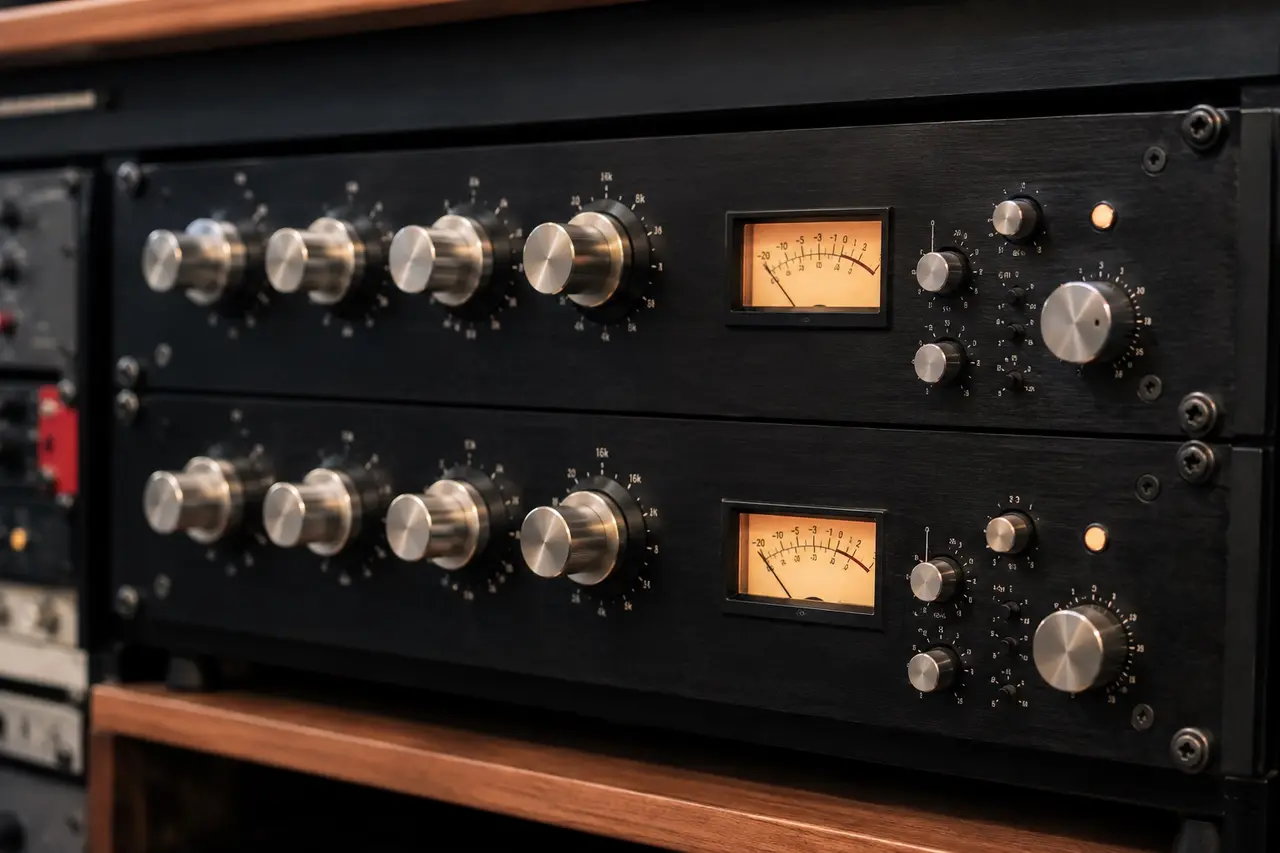
If the vocal, drums or other parts need a different balance, discuss mixing. If you already approve that balance and need the stereo mix prepared for release, discuss mastering. When the song still needs new parts, a different arrangement or another recording, identify that production work before deciding on either finishing stage.
Ask what you want to change
Try describing the problem without naming a tool. “The vocal disappears when the chorus enters” points toward a decision among individual elements. “These approved mixes need to work together as an EP” points toward the final release stage.
Mixing works with separate tracks or grouped stems; mastering usually works from an approved stereo mix and considers its final presentation and delivery. This distinction follows the workflow described in iZotope’s guide to mixing and mastering. The tools can overlap, so a limiter on the stereo bus does not, by itself, tell you which service a project needs.
Use this comparison to frame the conversation
| What you hear or need | Starting conversation |
|---|---|
| The vocal is buried or the kick and bass compete | Mixing: inspect the separate elements |
| A performance needs replacing or the chorus needs new parts | Recording or production scope before finishing |
| The mix is approved and release files are needed | Mastering: discuss the stereo mix and delivery |
| Approved songs need a considered relationship across an EP | Mastering: share the full sequence and references |
| Only a finished stereo file exists, but one instrument needs changing | Explain the limitation before agreeing a solution |
A stereo file offers less independent control than the original tracks. Some specialist work may still be possible, but do not assume mastering can replace a new vocal take or fully separate every sound. Send a specific description and ask what is feasible.
Prepare the right material
For mixing, describe the available multitracks or stems and include a rough mix that communicates your intention. Multitracks are separate recorded or programmed parts; stems are grouped submixes, such as drums or backing vocals. Agree which kind the recipient needs rather than relying on the filename “stems.”
Ask how to handle alignment, effects, alternate takes and any processing that is essential to the sound. A wet/dry pair or shared start point may be useful, but confirm the handoff before making extra exports. Keep a copy of the session and original recordings.
For mastering, start with the approved stereo mix, intended release format, track sequence if relevant and required versions. Describe any known problem and any mix processing that is deliberate. Agree export settings with the recipient; do not remove creative processing or change sample rates simply because of a generic checklist. The Ableton export manual documents the controls available when exporting from Live.
Treat loudness as a delivery conversation
A louder preview can influence a comparison. When judging a change, listen at comparable playback levels and explain what happens to the vocal, transients and overall movement, rather than asking only for “more volume.”
Spotify describes playback normalization and currently recommends a −14 LUFS integrated target and true peaks below −1 dBTP in its mastering tips, with additional guidance for louder masters. It also describes differences between playback modes and devices. These are Spotify’s own recommendations, not a universal target for every destination. Confirm the intended release and the current delivery requirements with the mastering engineer or distributor.
Define the work before sending files
AER discusses mixing and mastering as separate scopes. Editing, vocal work, revision rounds and export versions are agreed before a mixing session. Mastering begins with a conversation about the approved stereo mix, intended release and required formats. See AER’s mixing service and mastering service for the current scope descriptions.
Your first message can be short:
- What material exists: multitracks, grouped stems or an approved stereo mix.
- What you hear and want to change, with timestamps if helpful.
- A rough mix or reference description.
- Intended release, required versions and any delivery specification.
- Approval deadline, feedback contact and estimated budget range.
If you are unsure which stage you need, say that in the project enquiry below. Agree a sharing method before sending unreleased audio; you do not need to guess a technical diagnosis to start.
Sources and further reading
iZotope: the difference between mixing and mastering supports the stage distinction. Ableton: exporting audio documents export controls. Spotify: loudness normalization explains its playback behavior and mastering recommendations. The decision table and enquiry checklist are AER editorial guidance. Sources checked 16 October 2026.